Showing posts with label covenant. Show all posts

15/06/2020

An interesting encounter!

Sunday 14th June 2020
Psalm 148:1-14
Psalm 42:1-11
Romans 5:1-11
Genesis 18:1-15
Isaiah 55:6-12 (at the end)

An Interesting Encounter
Genesis 18:1-15


Introduction

Today we jump back not 2000 years to the time of the NT but 4000 years to the early days of the Old Testament.  The time of Abram, from Gen 17:5 Abraham, and before him in the OT record - not a lot, but, still significant. There are consistent themes emerging and flowing and not least that God is not removed and distant but interested and involved with his creation and people.

A highly significant and important passage in the fulfilment of God's promise that from Abraham and Sarah would be people as uncountable as the stars in the sky or the sand on the beach. This was part of Abraham's initial call in Genesis 12 and has been endorsed and enhanced with the promise of a son of his own through Sarah - we read about that in the previous chapter.

Although we may find aspects of these writings a little strange, what is odd, is that they are so human, down to earth and presented in such a matter of fact way. Also, they are no stranger than say, Jesus walking on the water and I have no problem with that - phone me if you want to know why! Odder than anything we read, and I have just said it, God involves himself by encountering people in a very down to earth way.

This chapter is the next step in this important bible account of God's plan of salvation but in the midst of all the seriousness there are a few amusing aspects and certainly I find myself smiling whenever I read it. We start with:

1.        Enigma - vv 1-2

Abraham having an encounter with the Lord who when he looks up is / are three men.

His first encounter was at his call, I've just mentioned it, when God effectively said: pack your bags, on your camel and I'll take you and show you something interesting, oh, and all nations will be blessed through you!

He went and did as he was told, more or less, just a few mistakes on the way, but he trusted with little or nothing to go on. He didn't have a bible on his mobile phone or even any books 


or sheets! He probably had the reliably handed down account of his family history at least back to Noah and maybe some more before that.

So back to the current encounter in vv 1-2 - what do we make of it? It is sort of clear here that there is more than meets the eye but when you read on to the account of Sodom and Gomorrah it is clear they are not 'humans' although that is what they appear to be.

Angels - that is messengers, as well as the Lord God, yes without a doubt.

What about more? Who is the supreme messenger of the Lord? We know him as Jesus, the eternal Son. Who was his replacement among all believers from Pentecost, remember, another helper? The Holy Spirit. So, The Lord - Father, Son and Holy Spirit -.

A similar enigma occurs in Exodus 3 at the burning bush. First, we are told the angel of the Lord, the messenger of the Lord, appeared, then we are told it is the Lord who is speaking. God does not change and how we know him today, post Pentecost, is how he always is even though he wasn't or couldn't have been understood in this way before Jesus arrived, the Word become flesh - the embodiment of the message and so the messenger - angel of the Lord.

Fascinating and an explanation - no being dogmatic - but make sense too!

2.        Haste - vv 3-8

[3] He said, "If I have found favour in your eyes, my lord, do not pass your servant by. [4] Let a little water be brought, and then you may all wash your feet and rest under this tree. [5] Let me get you something to eat, so you can be refreshed and then go on your way-now that you have come to your servant."
"Very well," they answered, "do as you say."
[6] So Abraham hurried into the tent to Sarah. "Quick," he said, "get three seahs of the finest flour and knead it and bake some bread."
[7] Then he ran to the herd and selected a choice, tender calf and gave it to a servant, who hurried to prepare it. [8] He then brought some curds and milk and the calf that had been prepared, and set these before them. While they ate, he stood near them under a tree.

1.        Seems he doesn't want them around for too long - v 5
2.        To Sarah - quick - v 6
3.        He ran - v 7 - I envy him, he's 99 (17:1) oh, and Sara is 90 (17:17) - keep hold of this
4.        It must have taken ages - they have made bread (16kg) to be eaten with a kind of yogurt as an accompaniment with the cooked calf!
5.        Sarah remains in the tent and Abraham stood nearby under a tree - a meal just for them and not even he partakes!

Somewhere, deep down, he realises that all of the is a little extra-ordinary. Perhaps, not surprising, in the previous chapter is the record of some serious stuff and maybe he is wondering 'what next'? Rightly so!

3.        Announcement - vv 9-12

This is a repeat of some of chapter 17 but this time in the presence of Sarah. So, a little rewind as I keep mentioning chapter 17 here are the essentials:

1.        It is the promise of covenant (highly special and significant contract) with the sign of circumcision for men vv 1-2
2.        It is the reiteration of him becoming the father of many nations and a change of name to reflect this, and a land of their own vv 3-8
3.        Sarai is to be called Sarah and will bear you a son - vv 15-16
4.        Ha, ha - goes Abraham under his breath face down - at our age - v 17
5.        Ha, ha, replies God - yes and through him this promise will be being fulfilled - oh, and call him Isaac - he laughs!!! All in 19-21
6.        One other thing to mention which has possible future significance as well as closer reality, within a few hundred years, the promise to both of them vv 6 & 16 of nations and kings. It was over 400 years to Moses and the significant nation and longer after that to king Saul and king David his son and who is king David's greater Son? Significant themes and strands all through but here just seeds.

Back to 18:9-12 after that detour - Where's Sarah, in the tent, so she can hear as you are in front of it - raised voice by the Lord maybe - baby by this time next year when I come back!!!! Best joke she had heard in ages - us, at our age!

4.        Confrontation - vv 13-15

But the Lord picked it up and questioned Abraham not just about the laugh but her disbelief,

He states, v 14 
Is anything too hard for the LORD? I will return to you at the appointed time next year, and Sarah will have a son.

And we hear Sarah speak for the first time and it says she lied and denied laughing.

Hold it, Abraham had laughed as we saw earlier so isn't this a bit harsh? I am going to say 'no' because as we considered Abraham wasn't rebuked but given the child's name which would remind him every time, he spoke it or called the child that he had laughed, Isaac, he laughs. God made his point in his way and meets and treats all accordingly.

We have to wait until chapter 21 to read the 'positive' outcome vv 1-6:

[21:1] Now the LORD was gracious to Sarah as he had said, and the LORD did for Sarah what he had promised. [2] Sarah became pregnant and bore a son to Abraham in his old age, at the very time God had promised him. [3] Abraham gave the name Isaac to the son Sarah bore him. [4] When his son Isaac was eight days old, Abraham circumcised him, as God commanded him. [5] Abraham was a hundred years old when his son Isaac was born to him.
[6] Sarah said, "God has brought me laughter, and everyone who hears about this will laugh with me."

They both responded positively and enjoyed a laugh with God and everyone else who wished to join them. Now, it would be lovely to say 'and they all lived happily ever after' but they didn't! They are and remain a dysfunctional family in lots of ways and read on in Genesis and they are followed by lots more.

Reflections

1.        Starting where we are - God uses ordinary people. Abraham is the father of many people of faith as a blood line and also, when we get t the NT, by adoption by the HS as a result of repentance and faith - non-Jews as well as Jews. And we are part of the fulfilment of the promise in Genesis 12:3 all people on earth will be blessed through you! Abraham, like all other bible characters, except Jesus, was flawed and a sinner. God uses sinners who trust him and are people of faith - and that includes you and me.

2.        I am glad. You see the bible narrative does not air brush or digitally manipulate the characters but shows them, in the proverbial words of Cromwell, warts and all! I think that's a sign of truth and authenticity of the text. Same is true of the 12 with Jesus.

Let's steer away from ideas that these texts are changed, exaggerated or the like. The 'heroes' of the scriptures are not super human but mostly like most of us!

3.        We see what we see in so many scriptures - and we were there last week, God is supreme over all 'nothing is too difficult'. We may not see what is happening or where we are heading - personally, as a gathered people, or in the events of the world - God is Sovereign.

4.        As sovereign he is not aloof, remote or distant - back to the beginning - he comes to us where we are as well as how we are! From Genesis 3 onwards we see him regularly with his feet on the ground, not least here, and especially when we look at Jesus. Consistency from start to finish - oh, and finish, Revelation 21 & 22 et al is a new heaven and earth and it 'all' coming don' not all going 'up'! Go see - the notes are on line for reference.

5.        Underneath and surrounding it all is God's 'steadfast / covenant love. Hang on, keep on, hang in and have a laugh because he really does love you and also, me despite all!

15/02/2020

David's prayer of thanksgiving


AxmTYklsjo190QW
AxmTYklsjo190QW


12/05/2018

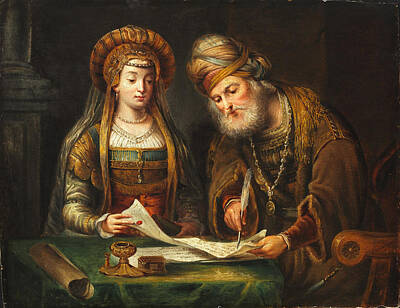
Esther

Image result for Esther
After Aert de Gelter
Where are we?

The events in the book of Esther occurred from 483 BC to 473 BC, during the first half of the reign of King Xerxes, who chose Esther as his queen. During this time period, the first remnant of Jews who had returned to Judah were struggling to reestablish temple worship according to the Law of Moses. But Esther and Mordecai, along with many other Jews, had chosen not to make the trek back to Judah. They seemed content to stay in Susa, the capital city of Persia, in which the story is set.

The book was written no earlier than 470 BC and probably no later than 424 BC, during the reign of Xerxes’ son Artaxerxes.

Why is Esther so important?

Esther is the only book in the Bible not to mention the name of God. But that is not to say that God was absent. His presence permeates much of the story, as though He were behind the scenes coordinating “coincidences” and circumstances to make His will happen.

Much like the book of Ruth, this book stands as one of the most skilfully written biblical books. Using eight feasts to systematically build and resolve suspense, the author constructed the story chiastically—using a Hebrew literary device in which events mirror each other inversely. Early listeners to the story would have recognised significant events and followed the rising tension with understanding.

Haman, the king’s evil second-in-command, was a descendant of Agag, king of the Amalekites, who were ancient enemies of God’s people (Numbers 24:7; 1 Samuel 15:8). He cast the lot, called “pur,” in order to determine the day that the Jews would be exterminated (Esther 3:7–9). The feast of Purim, still celebrated by Jews today, commemorates the Jews’ deliverance from Haman’s plot (9:24–32).

God is sovereign

While the primary purpose of the book of Esther was to relate the dramatic origins of the feast of Purim, a greater theme shines through the story. The sovereignty and faithfulness of God permeate each scene. Nothing is truly coincidental, the book of Esther says to us. God’s sovereignty is best summarised in Mordecai’s exhortation to Esther: “
Who knows if perhaps you were made queen for just such a time as this?”” (Esther 4:14).

When events seemed out of control to Esther and Mordecai, when the king dictated ruin for their people, when evil was poised to triumph . . . God was at work. 
He worked through their dark days (Esther was taken to the harem [2:1–16]), their faithful obedience (Esther risked her life before the king [5:1–3]), and their victories (Esther revealed Haman’s plot and the Jews’ destruction of their enemies [7–9]). This message is clear: God is sovereign even when life doesn’t make sense.

God is also the great Promise Keeper. Mordecai’s words reflected his faith that God would honor His eternal covenant with Abraham and David.

21/08/2014

Read the bible in one year. Day 9

Good evening everyone. I will put the last two days reading I have missed due to travelling and first day back home settling down. I think that it will work out all right in the end. Do join me as it is more fun and let me know if you do.
Esther 1-3:15

Queen Vashti Deposed 1 This is what happened during the time of Xerxes,[a] the Xerxes who ruled over 127 provinces stretching from India to Cush[b]: 2 At that time King Xerxes reigned from his royal throne in the citadel of Susa, 3 and in the third year of his reign he gave a banquet for all his nobles and officials. The military leaders of Persia and Media, the princes, and the nobles of the provinces were present.

4 For a full 180 days he displayed the vast wealth of his kingdom and the splendor and glory of his majesty. 5 When these days were over, the king gave a banquet, lasting seven days, in the enclosed garden of the king’s palace, for all the people from the least to the greatest who were in the citadel of Susa. 6 The garden had hangings of white and blue linen, fastened with cords of white linen and purple material to silver rings on marble pillars. There were couches of gold and silver on a mosaic pavement of porphyry, marble, mother-of-pearl and other costly stones. 7 Wine was served in goblets of gold, each one different from the other, and the royal wine was abundant, in keeping with the king’s liberality. 8 By the king’s command each guest was allowed to drink with no restrictions, for the king instructed all the wine stewards to serve each man what he wished.

9 Queen Vashti also gave a banquet for the women in the royal palace of King Xerxes.

10 On the seventh day, when King Xerxes was in high spirits from wine, he commanded the seven eunuchs who served him—Mehuman, Biztha, Harbona, Bigtha, Abagtha, Zethar and Karkas— 11 to bring before him Queen Vashti, wearing her royal crown, in order to display her beauty to the people and nobles, for she was lovely to look at. 12 But when the attendants delivered the king’s command, Queen Vashti refused to come. Then the king became furious and burned with anger.

13 Since it was customary for the king to consult experts in matters of law and justice, he spoke with the wise men who understood the times 14 and were closest to the king—Karshena, Shethar, Admatha, Tarshish, Meres, Marsena and Memukan, the seven nobles of Persia and Media who had special access to the king and were highest in the kingdom.

15 “According to law, what must be done to Queen Vashti?” he asked. “She has not obeyed the command of King Xerxes that the eunuchs have taken to her.”

16 Then Memukan replied in the presence of the king and the nobles, “Queen Vashti has done wrong, not only against the king but also against all the nobles and the peoples of all the provinces of King Xerxes. 17 For the queen’s conduct will become known to all the women, and so they will despise their husbands and say, ‘King Xerxes commanded Queen Vashti to be brought before him, but she would not come.’ 18 This very day the Persian and Median women of the nobility who have heard about the queen’s conduct will respond to all the king’s nobles in the same way. There will be no end of disrespect and discord.

19 “Therefore, if it pleases the king, let him issue a royal decree and let it be written in the laws of Persia and Media, which cannot be repealed, that Vashti is never again to enter the presence of King Xerxes. Also let the king give her royal position to someone else who is better than she. 20 Then when the king’s edict is proclaimed throughout all his vast realm, all the women will respect their husbands, from the least to the greatest.”

21 The king and his nobles were pleased with this advice, so the king did as Memukan proposed. 22 He sent dispatches to all parts of the kingdom, to each province in its own script and to each people in their own language, proclaiming that every man should be ruler over his own household, using his native tongue.
Esther 2 - Esther Made Queen 1 Later when King Xerxes’ fury had subsided, he remembered Vashti and what she had done and what he had decreed about her. 2 Then the king’s personal attendants proposed, “Let a search be made for beautiful young virgins for the king. 3 Let the king appoint commissioners in every province of his realm to bring all these beautiful young women into the harem at the citadel of Susa. Let them be placed under the care of Hegai, the king’s eunuch, who is in charge of the women; and let beauty treatments be given to them. 4Then let the young woman who pleases the king be queen instead of Vashti.” This advice appealed to the king, and he followed it.

5 Now there was in the citadel of Susa a Jew of the tribe of Benjamin, named Mordecai son of Jair, the son of Shimei, the son of Kish, 6who had been carried into exile from Jerusalem by Nebuchadnezzar king of Babylon, among those taken captive with Jehoiachin[c] king of Judah. 7 Mordecai had a cousin named Hadassah, whom he had brought up because she had neither father nor mother. This young woman, who was also known as Esther, had a lovely figure and was beautiful. Mordecai had taken her as his own daughter when her father and mother died.

8 When the king’s order and edict had been proclaimed, many young women were brought to the citadel of Susa and put under the care of Hegai. Esther also was taken to the king’s palace and entrusted to Hegai, who had charge of the harem. 9 She pleased him and won his favor. Immediately he provided her with her beauty treatments and special food. He assigned to her seven female attendants selected from the king’s palace and moved her and her attendants into the best place in the harem.

10 Esther had not revealed her nationality and family background, because Mordecai had forbidden her to do so. 11 Every day he walked back and forth near the courtyard of the harem to find out how Esther was and what was happening to her.

12 Before a young woman’s turn came to go in to King Xerxes, she had to complete twelve months of beauty treatments prescribed for the women, six months with oil of myrrh and six with perfumes and cosmetics. 13 And this is how she would go to the king: Anything she wanted was given her to take with her from the harem to the king’s palace. 14 In the evening she would go there and in the morning return to another part of the harem to the care of Shaashgaz, the king’s eunuch who was in charge of the concubines. She would not return to the king unless he was pleased with her and summoned her by name.

15 When the turn came for Esther (the young woman Mordecai had adopted, the daughter of his uncle Abihail) to go to the king, she asked for nothing other than what Hegai, the king’s eunuch who was in charge of the harem, suggested. And Esther won the favour of everyone who saw her. 16 She was taken to King Xerxes in the royal residence in the tenth month, the month of Tebeth, in the seventh year of his reign.

17 Now the king was attracted to Esther more than to any of the other women, and she won his favour and approval more than any of the other virgins. So he set a royal crown on her head and made her queen instead of Vashti. 18 And the king gave a great banquet, Esther’s banquet, for all his nobles and officials. He proclaimed a holiday throughout the provinces and distributed gifts with royal liberality.
Mordecai Uncovers a Conspiracy 19 When the virgins were assembled a second time, Mordecai was sitting at the king’s gate. 20 But Esther had kept secret her family background and nationality just as Mordecai had told her to do, for she continued to follow Mordecai’s instructions as she had done when he was bringing her up.

21 During the time Mordecai was sitting at the king’s gate, Bigthana[d] and Teresh, two of the king’s officers who guarded the doorway, became angry and conspired to assassinate King Xerxes. 22 But Mordecai found out about the plot and told Queen Esther, who in turn reported it to the king, giving credit to Mordecai. 23 And when the report was investigated and found to be true, the two officials were impaled on poles. All this was recorded in the book of the annals in the presence of the king.
Esther 3
Haman’s Plot to Destroy the Jews 1 After these events, King Xerxes honored Haman son of Hammedatha, the Agagite, elevating him and giving him a seat of honor higher than that of all the other nobles. 2 All the royal officials at the king’s gate knelt down and paid honor to Haman, for the king had commanded this concerning him. But Mordecai would not kneel down or pay him honor.

3 Then the royal officials at the king’s gate asked Mordecai, “Why do you disobey the king’s command?” 4 Day after day they spoke to him but he refused to comply. Therefore they told Haman about it to see whether Mordecai’s behavior would be tolerated, for he had told them he was a Jew.

5 When Haman saw that Mordecai would not kneel down or pay him honor, he was enraged. 6 Yet having learned who Mordecai’s people were, he scorned the idea of killing only Mordecai. Instead Haman looked for a way to destroy all Mordecai’s people, the Jews, throughout the whole kingdom of Xerxes.

7 In the twelfth year of King Xerxes, in the first month, the month of Nisan, the pur (that is, the lot) was cast in the presence of Haman to select a day and month. And the lot fell on[e] the twelfth month, the month of Adar.

8 Then Haman said to King Xerxes, “There is a certain people dispersed among the peoples in all the provinces of your kingdom who keep themselves separate. Their customs are different from those of all other people, and they do not obey the king’s laws; it is not in the king’s best interest to tolerate them. 9 If it pleases the king, let a decree be issued to destroy them, and I will give ten thousand talents[f] of silver to the king’s administrators for the royal treasury.”

10 So the king took his signet ring from his finger and gave it to Haman son of Hammedatha, the Agagite, the enemy of the Jews. 11“Keep the money,” the king said to Haman, “and do with the people as you please.”

12 Then on the thirteenth day of the first month the royal secretaries were summoned. They wrote out in the script of each province and in the language of each people all Haman’s orders to the king’s satraps, the governors of the various provinces and the nobles of the various peoples. These were written in the name of King Xerxes himself and sealed with his own ring. 13 Dispatches were sent by couriers to all the king’s provinces with the order to destroy, kill and annihilate all the Jews—young and old, women and children—on a single day, the thirteenth day of the twelfth month, the month of Adar, and to plunder their goods. 14 A copy of the text of the edict was to be issued as law in every province and made known to the people of every nationality so they would be ready for that day.

15 The couriers went out, spurred on by the king’s command, and the edict was issued in the citadel of Susa. The king and Haman sat down to drink, but the city of Susa was bewildered.

1 Corinthians 11:17-34
Listen to this passage

Correcting an Abuse of the Lord’s Supper
17 In the following directives I have no praise for you, for your meetings do more harm than good. 18 In the first place, I hear that when you come together as a church, there are divisions among you, and to some extent I believe it. 19 No doubt there have to be differences among you to show which of you have God’s approval. 20 So then, when you come together, it is not the Lord’s Supper you eat, 21 for when you are eating, some of you go ahead with your own private suppers. As a result, one person remains hungry and another gets drunk. 22 Don’t you have homes to eat and drink in? Or do you despise the church of God by humiliating those who have nothing? What shall I say to you? Shall I praise you? Certainly not in this matter!

23 For I received from the Lord what I also passed on to you: The Lord Jesus, on the night he was betrayed, took bread, 24 and when he had given thanks, he broke it and said, “This is my body, which is for you; do this in remembrance of me.” 25 In the same way, after supper he took the cup, saying, “This cup is the new covenant in my blood; do this, whenever you drink it, in remembrance of me.” 26 For whenever you eat this bread and drink this cup, you proclaim the Lord’s death until he comes.

27 So then, whoever eats the bread or drinks the cup of the Lord in an unworthy manner will be guilty of sinning against the body and blood of the Lord. 28 Everyone ought to examine themselves before they eat of the bread and drink from the cup. 29 For those who eat and drink without discerning the body of Christ eat and drink judgment on themselves. 30 That is why many among you are weak and sick, and a number of you have fallen asleep. 31 But if we were more discerning with regard to ourselves, we would not come under such judgment. 32 Nevertheless, when we are judged in this way by the Lord, we are being disciplined so that we will not be finally condemned with the world.

33 So then, my brothers and sisters, when you gather to eat, you should all eat together. 34 Anyone who is hungry should eat something at home, so that when you meet together it may not result in judgment.
And when I come I will give further directions.

Psalm 35:17-28
Listen to this passage
17 How long, Lord, will you look on?
Rescue me from their ravages,
my precious life from these lions.
18 I will give you thanks in the great assembly;
among the throngs I will praise you.
19 Do not let those gloat over me
who are my enemies without cause;
do not let those who hate me without reason
maliciously wink the eye.
20 They do not speak peaceably,
but devise false accusations
against those who live quietly in the land.
21 They sneer at me and say, “Aha! Aha!
With our own eyes we have seen it.”
22 LORD, you have seen this; do not be silent.
Do not be far from me, Lord.
23 Awake, and rise to my defense!
Contend for me, my God and Lord.
24 Vindicate me in your righteousness, LORD my God;
do not let them gloat over me.
25 Do not let them think, “Aha, just what we wanted!”
or say, “We have swallowed him up.”

26 May all who gloat over my distress
be put to shame and confusion;
may all who exalt themselves over me
be clothed with shame and disgrace.
27 May those who delight in my vindication
shout for joy and gladness;
may they always say, “The LORD be exalted,
who delights in the well-being of his servant.”
28 My tongue will proclaim your righteousness,
your praises all day long.
Proverbs 21:19-20
 19 Better to live in a desert
   than with a quarrelsome and nagging wife.
 20 The wise store up choice food and olive oil,
   but fools gulp theirs down.

14/08/2014

Bible in one year. Day 5

It is such a delight to read the Word of God, why don't you join me! 
Ezra Reads the Law 
    When the seventh month came and the Israelites had settled in their towns,

Nehemiah 8

 1 all the people came together as one in the square before the Water Gate. They told Ezra the teacher of the Law to bring out the Book of the Law of Moses, which the LORD had commanded for Israel.
 2 So on the first day of the seventh month Ezra the priest brought the Law before the assembly, which was made up of men and women and all who were able to understand. 3 He read it aloud from daybreak till noon as he faced the square before the Water Gate in the presence of the men, women and others who could understand. And all the people listened attentively to the Book of the Law.
 4 Ezra the teacher of the Law stood on a high wooden platform built for the occasion. Beside him on his right stood Mattithiah, Shema, Anaiah, Uriah, Hilkiah and Maaseiah; and on his left were Pedaiah, Mishael, Malkijah, Hashum, Hashbaddanah, Zechariah and Meshullam.
 5 Ezra opened the book. All the people could see him because he was standing above them; and as he opened it, the people all stood up. 6 Ezra praised the LORD, the great God; and all the people lifted their hands and responded, “Amen! Amen!” Then they bowed down and worshiped the LORD with their faces to the ground.
 7 The Levites—Jeshua, Bani, Sherebiah, Jamin, Akkub, Shabbethai, Hodiah, Maaseiah, Kelita, Azariah, Jozabad, Hanan and Pelaiah—instructed the people in the Law while the people were standing there. 8 They read from the Book of the Law of God, making it clear[a] and giving the meaning so that the people understood what was being read.
 9 Then Nehemiah the governor, Ezra the priest and teacher of the Law, and the Levites who were instructing the people said to them all, “This day is holy to the LORD your God. Do not mourn or weep.” For all the people had been weeping as they listened to the words of the Law.
 10 Nehemiah said, “Go and enjoy choice food and sweet drinks, and send some to those who have nothing prepared. This day is holy to our Lord. Do not grieve, for the joy of the LORD is your strength.”
 11 The Levites calmed all the people, saying, “Be still, for this is a holy day. Do not grieve.”
 12 Then all the people went away to eat and drink, to send portions of food and to celebrate with great joy, because they now understood the words that had been made known to them.
 13 On the second day of the month, the heads of all the families, along with the priests and the Levites, gathered around Ezra the teacher to give attention to the words of the Law. 14 They found written in the Law, which the LORD had commanded through Moses, that the Israelites were to live in temporary shelters during the festival of the seventh month 15 and that they should proclaim this word and spread it throughout their towns and in Jerusalem: “Go out into the hill country and bring back branches from olive and wild olive trees, and from myrtles, palms and shade trees, to make temporary shelters”—as it is written.[b]
 16 So the people went out and brought back branches and built themselves temporary shelters on their own roofs, in their courtyards, in the courts of the house of God and in the square by the Water Gate and the one by the Gate of Ephraim. 17 The whole company that had returned from exile built temporary shelters and lived in them. From the days of Joshua son of Nun until that day, the Israelites had not celebrated it like this. And their joy was very great.
 18 Day after day, from the first day to the last, Ezra read from the Book of the Law of God. They celebrated the festival for seven days, and on the eighth day, in accordance with the regulation, there was an assembly.

Nehemiah 9

The Israelites Confess Their Sins
 1 On the twenty-fourth day of the same month, the Israelites gathered together, fasting and wearing sackcloth and putting dust on their heads. 2Those of Israelite descent had separated themselves from all foreigners. They stood in their places and confessed their sins and the sins of their ancestors. 3 They stood where they were and read from the Book of the Law of the LORD their God for a quarter of the day, and spent another quarter in confession and in worshiping the LORD their God. 4 Standing on the stairs of the Levites were Jeshua, Bani, Kadmiel, Shebaniah, Bunni, Sherebiah, Bani and Kenani. They cried out with loud voices to the LORD their God. 5 And the Levites—Jeshua, Kadmiel, Bani, Hashabneiah, Sherebiah, Hodiah, Shebaniah and Pethahiah—said: “Stand up and praise the LORD your God, who is from everlasting to everlasting.[c]”
   “Blessed be your glorious name, and may it be exalted above all blessing and praise. 6 You alone are the LORD. You made the heavens, even the highest heavens, and all their starry host, the earth and all that is on it, the seas and all that is in them. You give life to everything, and the multitudes of heaven worship you.
 7 “You are the LORD God, who chose Abram and brought him out of Ur of the Chaldeans and named him Abraham. 8 You found his heart faithful to you, and you made a covenant with him to give to his descendants the land of the Canaanites, Hittites, Amorites, Perizzites, Jebusites and Girgashites. You have kept your promise because you are righteous.
 9 “You saw the suffering of our ancestors in Egypt; you heard their cry at the Red Sea.[d] 10 You sent signs and wonders against Pharaoh, against all his officials and all the people of his land, for you knew how arrogantly the Egyptians treated them. You made a name for yourself, which remains to this day. 11 You divided the sea before them, so that they passed through it on dry ground, but you hurled their pursuers into the depths, like a stone into mighty waters. 12 By day you led them with a pillar of cloud, and by night with a pillar of fire to give them light on the way they were to take.
 13 “You came down on Mount Sinai; you spoke to them from heaven. You gave them regulations and laws that are just and right, and decrees and commands that are good. 14 You made known to them your holy Sabbath and gave them commands, decrees and laws through your servant Moses.15 In their hunger you gave them bread from heaven and in their thirst you brought them water from the rock; you told them to go in and take possession of the land you had sworn with uplifted hand to give them.
 16 “But they, our ancestors, became arrogant and stiff-necked, and they did not obey your commands. 17 They refused to listen and failed to remember the miracles you performed among them. They became stiff-necked and in their rebellion appointed a leader in order to return to their slavery. But you are a forgiving God, gracious and compassionate, slow to anger and abounding in love. Therefore you did not desert them, 18 even when they cast for themselves an image of a calf and said, ‘This is your god, who brought you up out of Egypt,’ or when they committed awful blasphemies.
 19 “Because of your great compassion you did not abandon them in the wilderness. By day the pillar of cloud did not fail to guide them on their path, nor the pillar of fire by night to shine on the way they were to take. 20 You gave your good Spirit to instruct them. You did not withhold your manna from their mouths, and you gave them water for their thirst. 21 For forty years you sustained them in the wilderness; they lacked nothing, their clothes did not wear out nor did their feet become swollen.
Footnotes:
  1. Nehemiah 8:8 Or God, translating it
  2. Nehemiah 8:15 See Lev. 23:37-40.
  3. Nehemiah 9:5 Or God for ever and ever
  4. Nehemiah 9:9 Or the Sea of Reeds

1 Corinthians 9

Paul’s Rights as an Apostle
 1 Am I not free? Am I not an apostle? Have I not seen Jesus our Lord? Are you not the result of my work in the Lord? 2 Even though I may not be an apostle to others, surely I am to you! For you are the seal of my apostleship in the Lord.
 3 This is my defense to those who sit in judgment on me. 4 Don’t we have the right to food and drink? 5 Don’t we have the right to take a believing wife along with us, as do the other apostles and the Lord’s brothers and Cephas[a]? 6 Or is it only I and Barnabas who lack the right to not work for a living?
 7 Who serves as a soldier at his own expense? Who plants a vineyard and does not eat its grapes? Who tends a flock and does not drink the milk?8 Do I say this merely on human authority? Doesn’t the Law say the same thing? 9 For it is written in the Law of Moses: “Do not muzzle an ox while it is treading out the grain.”[b] Is it about oxen that God is concerned? 10 Surely he says this for us, doesn’t he? Yes, this was written for us, because whoever plows and threshes should be able to do so in the hope of sharing in the harvest. 11 If we have sown spiritual seed among you, is it too much if we reap a material harvest from you? 12 If others have this right of support from you, shouldn’t we have it all the more?
   But we did not use this right. On the contrary, we put up with anything rather than hinder the gospel of Christ.
 13 Don’t you know that those who serve in the temple get their food from the temple, and that those who serve at the altar share in what is offered on the altar? 14 In the same way, the Lord has commanded that those who preach the gospel should receive their living from the gospel.
 15 But I have not used any of these rights. And I am not writing this in the hope that you will do such things for me, for I would rather die than allow anyone to deprive me of this boast. 16 For when I preach the gospel, I cannot boast, since I am compelled to preach. Woe to me if I do not preach the gospel! 17 If I preach voluntarily, I have a reward; if not voluntarily, I am simply discharging the trust committed to me. 18 What then is my reward? Just this: that in preaching the gospel I may offer it free of charge, and so not make full use of my rights as a preacher of the gospel.

Footnotes:

Psalm 33:12-22


 12 Blessed is the nation whose God is the LORD,
   the people he chose for his inheritance.
13 From heaven the LORD looks down
   and sees all mankind;
14 from his dwelling place he watches
   all who live on earth—
15 he who forms the hearts of all,
   who considers everything they do.
 16 No king is saved by the size of his army;
   no warrior escapes by his great strength.
17 A horse is a vain hope for deliverance;
   despite all its great strength it cannot save.
18 But the eyes of the LORD are on those who fear him,
   on those whose hope is in his unfailing love,
19 to deliver them from death
   and keep them alive in famine.
 20 We wait in hope for the LORD;
   he is our help and our shield.
21 In him our hearts rejoice,
   for we trust in his holy name.
22 May your unfailing love be with us, LORD,
   even as we put our hope in you.

Proverbs 21:11-12
 11 When a mocker is punished, the simple gain wisdom;
   by paying attention to the wise they get knowledge.
 12 The Righteous One[a] takes note of the house of the wicked
   and brings the wicked to ruin.

27/01/2012

I am no longer my own, but yours

I am no longer my own, but yours.
Your will, not mine, be done in all things, wherever you may place me,
in all that I do and in all that I may endure; 
when there is work for me and where there is none;
 when I am troubled and when I am at peace.

Your will be done when I am valued and when I am disregarded;
 when I find fulfilment and when it is lacking; 
when I have all things, and when I have nothing.
I willingly offer all I have and am to serve you, as and where you choose. 
Glorious and blessed God, Father, Son and Holy Spirit,
 you are mine and I am yours. 
May it be so for ever.
Let this covenant now made on earth be fulfilled in heaven.
 In the name of Jesus-Christ, our saviour. Amen.

Have a blessed evening. Your sister in Christ. N.