Showing posts with label God's love. Show all posts

25/11/2018

Little Alice fell...

“Little Alice fell
d
o
w
n
the hOle,
bumped her head
and bruised her soul”

an unusual Saturday.. I felt that I was falling down ...
...until my Saviour picked me up again....this morning ..
Praise the Lord for his mercy ...


Did you know that ....?

While a few critics may try to read allegories of doctrinal debates into the work of Charles Dodgson (Lewis Carroll was Dodgson’s pen name), no one would accuse him of writing Christian allegory, although that rabbit hole certainly lends itself to all kinds of fun possible interpretations. 
Perhaps such strangeness explains why neither literary specialists nor Christian readers pay much attention to the relationship of Dodgson’s faith to his work. Maybe they should ....another day....


14/03/2018

I am He


Image result for the samaritan woman

Gospel of John, 4:26

4 Now he (Jesus)  had to go through Samaria. 5 So he came to a town in Samaria called Sychar, near the plot of ground Jacob had given to his son Joseph. 6 Jacob’s well was there, and Jesus, tired as he was from the journey, sat down by the well. It was about noon. 7 When a Samaritan woman came to draw water, Jesus said to her, “Will you give me a drink?” 8 (His disciples had gone into the town to buy food.) 9 The Samaritan woman said to him, “You are a Jew and I am a Samaritan woman. How can you ask me for a drink?” (For Jews do not associate with Samaritans.)

10 Jesus answered her, “If you knew the gift of God and who it is that asks you for a drink, you would have asked him and he would have given you living water.

11 “Sir,” the woman said, “you have nothing to draw with and the well is deep. Where can you get this living water? 12 Are you greater than our father Jacob, who gave us the well and drank from it himself, as did also his sons and his livestock?”
13 Jesus answered, “Everyone who drinks this water will be thirsty again,14 but whoever drinks the water I give them will never thirst. Indeed, the water I give them will become in them a spring of water welling up to eternal life.”

15 The woman said to him, “Sir, give me this water so that I won’t get thirsty and have to keep coming here to draw water.” 16 He told her, “Go, call your husband and come back.” 17 “I have no husband,” she replied. Jesus said to her, “You are right when you say you have no husband.18 The fact is, you have had five husbands, and the man you now have is not your husband. What you have just said is quite true.”

19 “Sir,” the woman said, “I can see that you are a prophet. 20 Our ancestors worshiped on this mountain, but you Jews claim that the place where we must worship is in Jerusalem.”
21 “Woman,” Jesus replied, “believe me, a time is coming when you will worship the Father neither on this mountain nor in Jerusalem. 22 You Samaritans worship what you do not know; we worship what we do know, for salvation is from the Jews.

23 Yet a time is coming and has now come when the true worshipers will worship the Father in the Spirit and in truth, for they are the kind of worshipers the Father seeks. 24 God is spirit, and his worshipers must worship in the Spirit and in truth.”

25 The woman said, “I know that Messiah” (called Christ) “is coming. When he comes, he will explain everything to us.”

26 Then Jesus declared, “I, the one speaking to you—I am he.”

13/05/2017

Is Jesus your personal saviour?

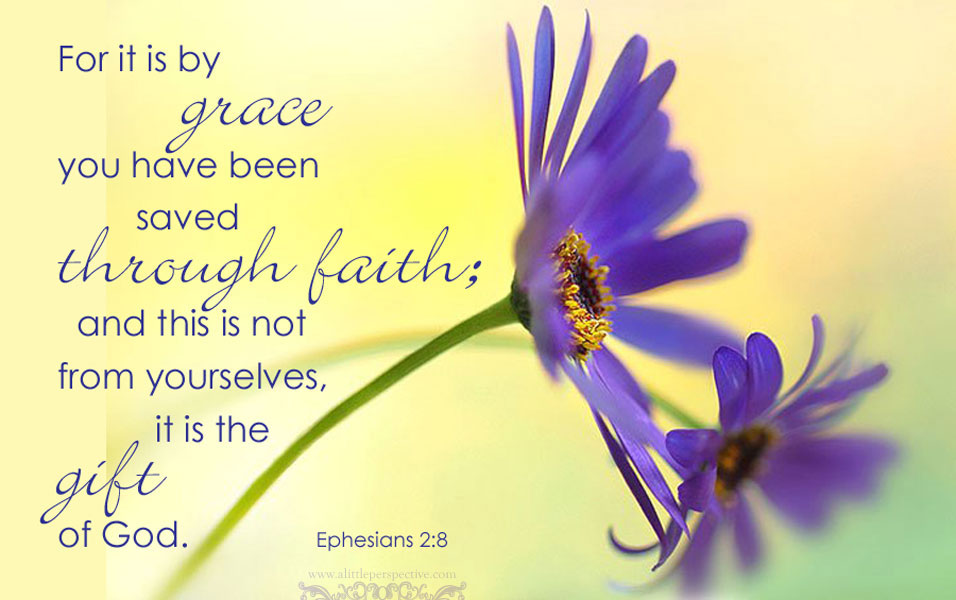
Résultats de recherche d'images pour « ephesians 2 8-9 »

God’s original plan for all man is to be in perfect fellowship with Him all of the time. He loves and desires for everyone to be saved.
However beginning with the first sin in the Garden man was separated from the perfect love and plan of God.
God in His perfect love for us sacrificed His only Son Jesus to restore us back to His perfect plan, to be in the complete love and fellowship with Him.

God’s plan of salvation for us is so simple, we must confess with our mouth that Jesus is our personal Savior and believe in our heart that God raised Him from the dead for us to be saved.
The Bible is clear that there is no one that is righteous on their own and that all must receive Jesus to be saved.

To receive Jesus as your personal Savior just say and believe this simple prayer by faith:
“Dear Lord Jesus,
I know I am a sinner, and I ask for your forgiveness. I believe you died for my sins and rose from the dead. I believe in my heart and confess with my mouth that Jesus is my Savior.


If you have prayed this prayer of salvation, welcome to the family of God! 
You have just made Jesus your Savior and Heaven your home. 
It is Important that you join a Bible believing Church and to fellowship with Christians, your brothers and sisters in Christ and continue to learn and experience the Love of God and grow in the knowledge of Him.

03/09/2016

The only one God to bring you freedom!

Image result for the only one God Jesus

My friends out there, if you are in pain, in trouble, emotionally hurting or dying inside, do not despair, have you ever taken the time to consider Jesus-Christ? 
In the Bible, the apostle John writes:  16 For God so loved the world that He gave His only begotten Son, that whoever believes in Him should not perish but have everlasting life.
Consider then Jesus-Christ wh
o walked on our earth to save us not to condemn us.
Jesus-Christ who was crucified for our sins instead of us. This is why Jesus is called our Redeemer, He's taken on him the price of our debt. 
Image result for Isaiah 53:5

Isaiah, a prophet of the Lord in the Old Testament prophesizes about Jesus-Christ dying for us on the cross. Call on Him and He who is the only living God, will give you freedom and take your burdens on Himself. 

Trust God to take away your fear!

2 Timothy 1:7
7 For God has not given us a spirit of fear, but of power and of love and of a sound mind.
In some versions, it says 'cowardice' instead of fear, in others, it speaks of 'timidity'
Our King and Saviour, Jesus tells us in the gospel of John 14:27
27 Peace I leave with you; my peace I give you. I do not give to you as the world gives. Do not let your hearts be troubled and do not be afraid.
Again, in the  Gospel of Matthew 6:34 Jesus tells us: Therefore do not worry about tomorrow, for tomorrow will worry about itself. Each day has enough trouble of its own.
The apostle Peter encourages us too, he says in 1 Peter 5:6:7
6 Humble yourselves, therefore, under God’s mighty hand, that he may lift you up in due time.
7 Cast all your anxiety on him because he cares for you.
So brothers and sisters in Christ, let's us be joyful today and confident in Jesus-Christ, our rock and King, not letting our heart tremble by what we hear or see in the news for He loves us, we are his beloved children.  Amen.

For God gave us a spirit not of fear but of by EmilyBurgerDesigns:

22/06/2016

We were all babies once!


When I read this verse in Jeremiah I was in awe. This verse opened my eyes to our Father's deep love for all his children not just when they pop out but when they are tiny. It also meant that we cannot forget that the beginning of life is happening in a mother's womb and that at each step of its 'knitting' it's precious. 
In Psalm 139 13-14 The Psalmist reminds us that each baby is wonderfully made. 


What do scientists make of those amazing verses? According to Dr. Alfred M. Bongiovanni, professor of obstetrics at the University of Pennsylvania, 'human life begins at the time of conception. I submit that human life is present throughout this entire sequence from conception to adulthood and that any interruption at any point throughout this time constitutes a termination of human life.” 

Speaking of the early stages of a child’s development in the womb, Professor Bongiovanni says, “I am no more prepared to say that these early stages represent an incomplete human being than I would be to say that the child prior to the dramatic effects of puberty is not a human being. This is human life at every stage.”

Also Dr. Jerome LeJeune, genetics professor at the University of Descartes in Paris, states, “after fertilization has taken place a new human being has come into being.” He says this “is no longer a matter of taste or opinion. Each individual has a very neat beginning, at conception.

Professor Micheline Matthews-Roth of Harvard University Medical School argues, “It is scientifically correct to say that an individual human life begins at conception.”

To conclude, I share these verses found in the Book of Job, ch 10 v 8:12 when Job is in utter adversity and rightly worried about his future! 

“Your hands shaped me and made me.
    Will you now turn and destroy me?
Remember that you molded me like clay.
    Will you now turn me to dust again?
10 
Did you not pour me out like milk
    and curdle me like cheese,
11 
clothe me with skin and flesh
    and knit me together with bones and sinews?
12 
You gave me life and showed me kindness,
    and in your providence watched over my spirit.


02/06/2016

Encouraging verse!


The English Standard Version says
Psalm 42:8
By day the Lord commands his steadfast love,
and at night his song is with me,
a prayer to the God of my life.

16/09/2015

Page after page after page

Then!
Chris Bennett: The Dock project began back in 2009 and at that stage everything around here was still a building site, it was still scaffolding and big holes in the ground. But at that stage I was asked by Bishop Harold, I'm an ordained Church of Ireland Minister, and I'd been kind of looking for my next challenge and Harold suggested that the challenge might be trying to dream up and think up what might be an appropriate expression of church in the midst of the Titanic Quarter as it grew.
Now:
Chris Bennett: We have seen amazing growth in many ways but there's no doubt that The Tall Ships festival in Belfast in July certainly put us to the test. It was, in every way, a big event. Fifty ships, 50,000 visitors and, over four days, the Dock Café served 5,510 customers!
We've also just celebrated another milestone in that we have filled a complete Visitors' Book in Dock Café. It may not sound like much but, when we opened in 2012, we commissioned some lovely leather-bound visitors' - books though it seemed impossible that we would ever run out of space. Hundreds of pages, eight entries per page... there would never be that many customers through our doors, would there?
Page after page after page tells a story of visitors finding a welcome, wanderers finding a home, individuals finding friendship, busy people finding peace, stressed people finding space, sorrowful people finding a smile, sceptical people finding faith (or sometimes just some experience of God, or grace, or something divine that they can't quite put their finger on...)
The Dock charity is made up of a number of things: café, art gallery, museum and, of course, church – a church which continues to involve a team of dedicated volunteers and chaplains from across all church backgrounds, both Protestant and Catholic, who are committed to sharing every step of the journey of building community in this new part of Belfast.
We also have a prayer garden where people can rest and reflect, or talk to one of our Prayer Team. It's a little oasis of greenery and peace in the corner of The Dock Café and is open during Café hours; providing a space to reflect, read from our library of books, and maybe write a prayer and post it on the wall or in the prayer journal.
Find out more about this Fresh Expression project, read on, click here!

15/07/2015

Hezekiah's illness and recovery!

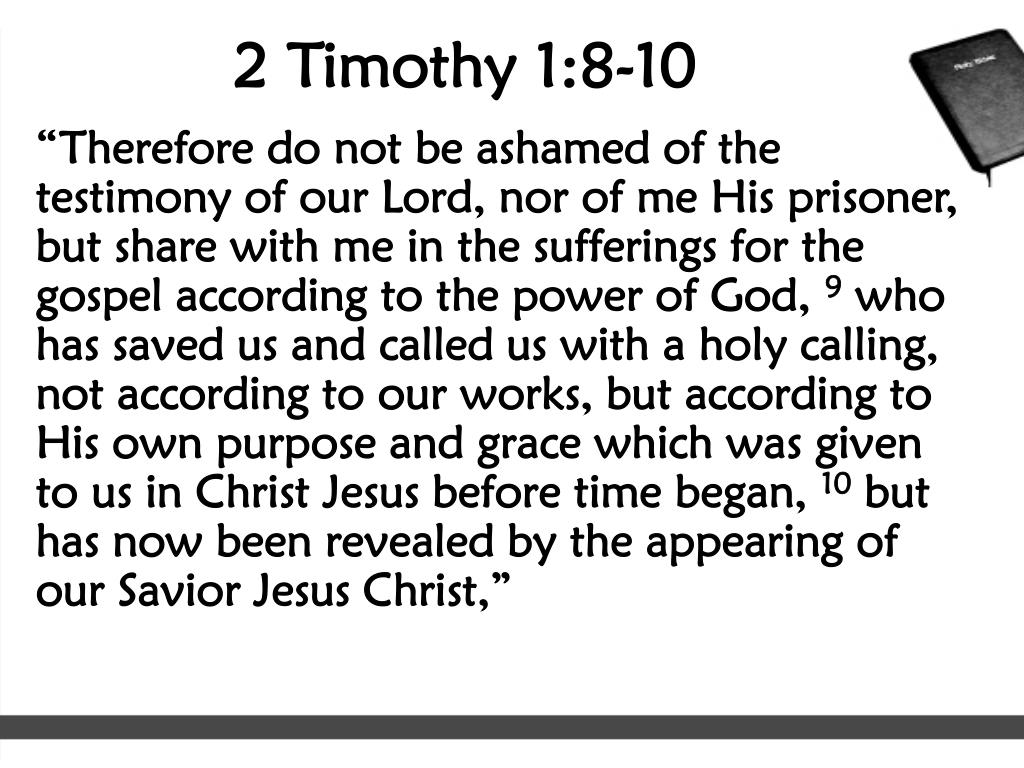
Image result for (2 Timothy 1:10)


Isaiah 38New Living Translation (NLT)

Hezekiah’s Sickness and Recovery

38 About that time Hezekiah became deathly ill, and the prophet Isaiah son of Amoz went to visit him. He gave the king this message: “This is what the Lordsays: ‘Set your affairs in order, for you are going to die. You will not recover from this illness.’”
When Hezekiah heard this, he turned his face to the wall and prayed to the Lord, “Remember, O Lord, how I have always been faithful to you and have served you single-mindedly, always doing what pleases you.” Then he broke down and wept bitterly.
Then this message came to Isaiah from the Lord: “Go back to Hezekiah and tell him, ‘This is what the Lord, the God of your ancestor David, says: I have heard your prayer and seen your tears. I will add fifteen years to your life,and I will rescue you and this city from the king of Assyria. Yes, I will defend this city.
“‘And this is the sign from the Lord to prove that he will do as he promised: I will cause the sun’s shadow to move ten steps backward on the sundial[a] of Ahaz!’” So the shadow on the sundial moved backward ten steps.

A. The mercy of God to Hezekiah.

1. (1) Isaiah’s announcement to Hezekiah.

In those days Hezekiah was sick and near death. And Isaiah the prophet, the son of Amoz, went to him and said to him, “Thus says the LORD: ‘Set your house in order, for you shall die and not live.’”

a. In those days: This happened at the time of the Assyrian invasion of Judah, because Jerusalem had not been delivered from the Assyrian threat yet (Isaiah 38:6). The events of this chapter are also recorded in 2 Kings 20:1-11.

i. “Interpreters agree that the events described in chapters 38 and 39 preceded the invasion of 701 B.C. . . Many date these events in 703 B.C., but the evidence more strongly suggests a date of about 712 B.C.” (Wolf)

b. Was sick and near death: We are not told how Hezekiah became sick. It may have been through something obvious to all, or it may have been through something known only to God. However Hezekiah became sick, it was certainly permitted by the LORD.

c. Set your house in order, for you shall die and not live: God was remarkably kind to Hezekiah, telling him that his death was near. Not all people are given the time to set your house in order.

i. We know from comparing 2 Kings 18:2 with 2 Kings 20:6, that Hezekiah was 39 years old when he learned he would soon die.

2. (2-3) Hezekiah’s prayer.

Then Hezekiah turned his face toward the wall, and prayed to the LORD, and said, “Remember now, O LORD, I pray, how I have walked before You in truth and with a loyal heart, and have done what is good in Your sight.” And Hezekiah wept bitterly.

a. Hezekiah turned his face toward the wall: This shows how earnest Hezekiah was in his prayer. He directed his prayer in privacy to God, and not to any man.

b. Remember now, O LORD: To our ears, Hezekiah’s prayer might almost sound ungodly. In it, his focus is on self-justification and his own merits. It is pretty much as if Hezekiah prayed, “LORD, I’ve been such a good boy and You aren’t being fair to me. Remember what a good boy I’ve been and rescue me.”

i. But under the Old Covenant, this was a valid principle on which to approach God. Passages like Leviticus 26 and Deuteronomy 28 show that under the Old Covenant, blesssing and cursing was sent by God on the basis of obedience or disobedience. On that principle, David could write in Psalm 15: LORD, who may abide in Your tabernacle? Who may dwell in Your holy hill? He who walks uprightly, and works righteousness, and speaks the truth in his heart. (Psalm 15:1-2)

ii. But under the New Covenant, we are blessed on the principle of faith in Jesus (Galatians 3:13-14). Hezekiah’s principle of prayer isn’t fitting for a Christian today. We pray in the name of Jesus (John 16:23-24), not in the name of who we are or what we have done.

iii. “We come across similar pleas again and again in the prayers of God’s children of old. The Psalms abound with them. But we do not find them in the New Testament. The Church bases its pleas on Christ’s righteousness.” (Bultema)

c. And Hezekiah wept bitterly: Why was Hezekiah so undone at the prospect of death? Many Christians today would say, “Take me home, LORD!” But Hezekiah lived under the Old Covenant, and at that time there was not a confident assurance of the glory in the life beyond. Instead, Jesus brought life and immortality came to light through the gospel (2 Timothy 1:10). Also, under the Old Covenant Hezekiah would have regarded this as evidence that God was very displeased with him.

3. (4-5) Isaiah brings God’s answer to Hezekiah’s prayer.

And the word of the LORD came to Isaiah, saying, “Go and tell Hezekiah, ‘Thus says the LORD, the God of David your father: “I have heard your prayer, I have seen your tears; surely I will add to your days fifteen years.”’”

a. I will add to your days fifteen years: In response to Hezekiah’s prayer, God granted Hezekiah fifteen years more.

i. Because Hezekiah recovered, was God’s word (You shall die and not live, Isaiah 38:1) proved false? No; first, Hezekiah did in fact die, just not as soon as God first announced. Second, when God announces judgment it is almost always an invitation to repent and to receive mercy.

b. I have heard your prayer: Hezekiah’s prayer was important. By all indications, if Hezekiah had not made his passionate prayer, then his life would not have been extended. Prayer matters!

i. In fact, God gave two gifts to Hezekiah. First, He gave the gift of an extended life. Second, He gave the gift of knowing he only had fifteen years left. If he were wise, this would still give King Hezekiah the motivation to walk right with God and to set his house in order.

4. (6) The promise of deliverance from the Assyrian threat.

“I will deliver you and this city from the hand of the king of Assyria, and I will defend this city.”

a. This promise is in accord with the LORD’s previous prophecies of deliverance, and dates this chapter as being before God destroyed the Assyrian army (Isaiah 37:36-37).

b. The connection of the two promises indicates that one would confirm the other. When Hezekiah recovered his health, he could know that God would also deliver him from the Assyrians.

5. (7-8) A sign to confirm the promise.

“And this is the sign to you from the LORD, that the LORD will do this thing which He has spoken: Behold, I will bring the shadow on the sundial, which has gone down with the sun on the sundial of Ahaz, ten degrees backward.” So the sun returned ten degrees on the dial by which it had gone down.

a. This is the sign . . . that the LORD will do this thing which He has spoken: God showed even more mercy to Hezekiah. God was under no obligation to give this sign. In fact, God would have been justified in saying, “Hey Hezekiah, I said it and you believe it. How dare you not take My word for true?” But in real love, God gave Hezekiah more than he needed or deserved.

i. God shows the same mercy to us. It should be enough for God to simply say to us, “I love you.” But God did so much to demonstrate His love to us (John 3:16, Romans 5:8).

b. Behold, I will bring the shadow of the sundial . . . ten degrees backward: God promised to do something completely miraculous for the confirming sign. And it happened just as God promised: So the sun returned ten degrees on the dial by which it had gone down.

i. This was a wonderfully appropriate sign for Hezekiah. By bringing the shadow of the sundial move backward, it gave more time in a day - just as God gave Hezekiah more time.

ii. How was this miracle accomplished? We simply don’t know. God could have simply “moved the sun back.” Or, He may have simply provided the miraculous appearance of it on the sundial of Ahaz. It doesn’t really matter how God did it; He has miraculous resources and ways we know nothing about.

Source : click here

Sing to the Lord and thank Him


for He is awesome, powerful and merciful, swift to forgive and slow to anger. In Psalm 147 v 3 we read that 'He heals the brokenhearted and binds up their wounds.'

The Story of Psalm 147

This psalm tells us something about God’s love and his power. Here, power does not only mean that he rules everything. It also means that he is very, very strong. It is the second of the 5 *Hallelujah Psalms, 146-150. "*Hallelujah" means "*praise the *LORD". This means "tell the *LORD that he is very great". In verse 1, "*praises" are words that say how great somebody is. "*LORD" is the *covenant name for God. A *covenant is when two people (or groups of people) agree. Here, God agrees to love and give help to his people. His people agree to love and obey God. In verse 5 is another word, "*Lord". This is not the same Hebrew word as "*LORD". Hebrew is the language that the *Jews spoke. They wrote the psalms in Hebrew. "*Lord" translates a Hebrew word that means "master" or "someone with authority".
There are three parts in this psalm:
  ·   verses 1 - 6: God’s power in Israel and Babylon and in the skies above;
  ·   verses 7 - 11: God’s power on the earth with plants and animals;
  ·   verses 12 - 20: God’s power in giving his people what they need.
In the Greek Bible, (verses 1-11) make Psalm 146 and verses 12-20 Psalm 147. This Greek Bible makes Psalms 9 and 10 into one psalm. All the numbers from 10 to 146 are one less than in our Bibles. The *Jews translated their Hebrew Bible into Greek about 200 years before Jesus came to the earth.
We do not know who wrote Psalm 147. But many Bible students think that it was after the *exile. The note on verses 2 and 3 explains the *exile. The *Jews used Psalm 147 in the new *temple (house of God) in Jerusalem. Maybe Nehemiah or one of his friends wrote Psalm 147.

What Psalm 147 means

Verses 2 and 3 tell us that God is powerful among the countries of the world. God let the Babylonians beat his people that lived near Jerusalem. This happened about 600 years before Jesus came to the earth. The Babylonians destroyed the city and took the people away to Babylon. Babylon was a country east of Jerusalem. They made them live there for 70 years. They were exiles, (they lived away from their own country). This happened because God’s people did not love him nor obey him. But after 70 years, God destroyed Babylon and brought his people home. He built Jerusalem again and made his people feel happy again. Some of them had broken hearts. This is a way to say that they felt very, very sad (or depressed). Other people had injuries. 
Verse 6 tells us about poor people and *wicked people. "*Wicked" means "very, very bad". Perhaps the *psalmist meant the people of Babylon. God threw them to the ground. This means that he destroyed them. He did this when he sent the Persian army to fight the Babylonian army. But God lifted up the poor people. Perhaps they were the *Jewish people. He gave them help to go home from Babylon.
Verse 7 starts the next part of the psalm. The harp usually makes quiet music, but it can be loud.
Verse 8: In the Greek Bible, there is a bit more in this verse. At the end, it says ‘He gives plants for men to use’. Many English translations put this extra bit in.
Verse 9: A raven is a big, black bird. In this verse, God makes sure that other people, animals or birds feed themselves or their young. God does not do it himself. The *psalmist says that God really did it! This is because it is part of God’s great plan. The *psalmist is the person that wrote the psalm.
Verse 11: "In awe" means that you love somebody that you are a bit afraid of! People that are "in awe" of God obey him. Also, they *trust him, (or believe that he will do what he has promised to do).
Verses 12 - 14 start the last part of the psalm. God gives his people a city to live in, Jerusalem. Jerusalem is also called Zion. He gives them a safe country to live in. That is what safe *borders means. He gives his people good food. All this happened after the *exile. Psalm 149 in this set of psalms explains what the *exile was. Bible students think that the *psalmist wrote Psalm 147 after the *exile. It was a psalm for the new *temple. The *temple in Jerusalem was the house of God. 
Verses 15 - 18 tell us that God rules the earth as well as the people in it. "Frost" is very little bits of ice. It falls on plants and buildings in very cold weather. Hail is larger bits of ice. It falls like rain or snow. "Icy" means "very, very cold". In verse 18, the weather becomes warm again. Ice becomes water, and the water runs away. Again, God made the rules that the weather must obey. When it is cold, water changes to ice. When it gets warm, ice changes to water. 
Verses 19 - 20 end the psalm. They tell us that only the *Jewish people knew his rules and *laws. "*Laws" is another word for "rules". This is not true now, because everybody with a Bible knows God’s rules and *laws. These rules and *laws are not only about what is right and wrong. They are also about what happens in the world.
Word List
bandage ~ a piece of cloth that you put on a *wound.
border ~ edge of a country.
broken hearts ~ a way to say that someone is very, very sad.
covenant ~ two people have agreed what each should do (here, God and his people). Look in Psalm 120 about the covenant.
exile ~ away from your own country.
frost ~ cold white powder like snow.
hail ~ ice in rain.
hallelujah ~ say that the *LORD is great. (Jah is *Hebrew for *LORD.)
harp ~ a *musical instrument.
heart ~ part of the body. *Jews believed that you thought in your heart.
Hebrew ~ the language that the Jews spoke; they wrote the Psalms in Hebrew.
icy ~ very, very cold.
in awe ~ a bit afraid of someone that you love.
injury ~ a place on your body. Someone has hit you, or cut you with a knife.
Jew ~ a person who is born from Abraham, Isaac and Jacob and their children.
Jewish ~ a word that describes a *Jew or anything to do with a *Jew.
laws ~ the rules in a country. In Psalm 147, God’s rules.
LORD ~ the *covenant name for God (in a *covenant you agree with someone).
musical instrument ~ something that makes music when you hit it (cymbals, drum), blow in it (flute, trumpet, horn, shofar) or touch it in a quiet way (harp, lyre). Many of these are in Psalm 150 in Book 5 of The Psalms of David.
pleasant ~ nice; what we like to do.
power ~ See The Story of Psalm 147.
praise ~ to say how great someone is; or, words that say how great someone is.
psalmist ~ the person that wrote a psalm (or psalms).
punish ~ hurt someone because they have not obeyed the rules.
raven ~ a big, black bird.
temple ~ a place where people meet to worship God.
trust ~ believe that someone (usually God in the psalms) will be kind to you.
wicked ~ very, very bad.
wound ~ mark on the body. Someone hit it or cut it.
Have a blessed evening. N.
source click here

10/07/2015

I am the light of the world!


Then spake Jesus again unto them, saying, I am the light of the world: he that followeth me shall not walk in darkness, but shall have the light of life. John 8:12 (KJV)

John 8:12 (CJB) Yeshua spoke to them again: "I am the light of the world; whoever follows me will never walk in darkness but will have the light which gives life."

John 8:12 (NIV) When Jesus spoke again to the people, he said, "I am the light of the world. Whoever follows me will never walk in darkness, but will have the light of life."

John 8:12 (NLT) Jesus, the Light of the World Jesus spoke to the people once more and said, “I am the light of the world. If you follow me, you won’t have to walk in darkness, because you will have the light that leads to life.”

31/05/2015

God's steadfast love


How do we know that God loves us? At times, we feel lonely and miserable, unable to function, however the thought of being loved by our Father in heaven is balm on our wounds. 

All the following verses in the Bible, the word of God, tell us so. Remember that 'All Scripture is inspired by God and profitable for teaching, for reproof, for correction, for training in righteousness;so that the man of God may be adequate, equipped for every good work. 2 Timothy 3:17

- but God shows his love for us in that while we were still sinners, Christ died for us. 
Romans 5:8 

So we have come to know and to believe the love that God has for us. God is love, and whoever abides in love abides in God, and God abides in him. 1 John 4:16

John 3:16 - For God so loved the world, that he gave his only Son, that whoever believes in him should not perish but have eternal life.

Romans 8:37-39 - No, in all these things we are more than conquerors through him who loved us. For I am sure that neither death nor life, nor angels nor rulers, nor things present nor things to come, nor powers, nor height nor depth, nor anything else in all creation, will be able to separate us from the love of God in Christ Jesus our Lord.

Ephesians 2:4-5 - But God, being rich in mercy, because of the great love with which he loved us, even when we were dead in our trespasses, made us alive together with Christ— by grace you have been saved ...

Humble yourselves, therefore, under the mighty hand of God so that at the proper time he may exalt you, casting all your anxieties on him, because he cares for you. 
1 Peter 5:6-7 

So that Christ may dwell in your hearts through faith—that you, being rooted and grounded in love, may have strength to comprehend with all the saints what is the breadth and length and height and depth, and to know the love of Christ that surpasses knowledge, that you may be filled with all the fullness of God. Ephesians 3: 17-19

 But you, O Lord, are a God merciful and gracious, slow to anger and abounding in steadfast love and faithfulness. 
Psalm 86:15 

 The LORD your God is in your midst, a mighty one who will save; he will rejoice over you with gladness; he will quiet you by his love; he will exult over you with loud singing. 
Zephaniah 3:17